
After a sale, the owner's doorway can move two states away. In 47 of 65 Hampton Roads deals the buyer is outside Virginia. Here's what stops traveling.

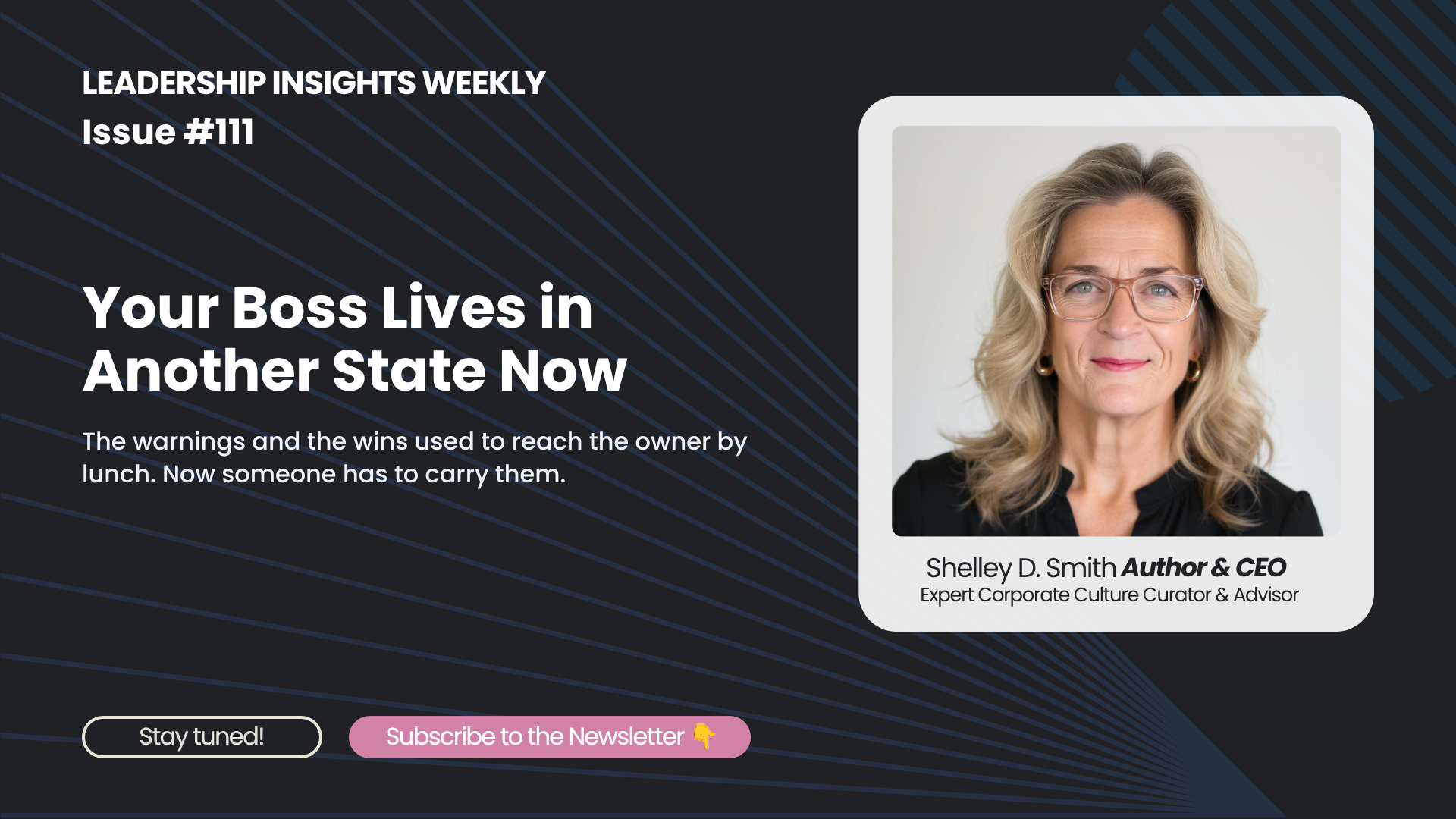
It used to take about thirty seconds.
You'd walk down the hall, lean into the owner's doorway and ask...
"Can we take care of this customer?" or "I need to bring someone on before the holidays."
You'd get a yes or a no right there in the doorway, and you'd walk back to your team with an answer. Now it's an email to someone in another state, or a request in a system that didn't exist here a year ago.
The answer comes Thursday, if it comes this week at all. And in between, your team keeps asking what they said, and you keep telling them you're still waiting to hear back.
Nobody sent a memo saying you're no longer the person who knows.
But somewhere in the first few months after the sale, you stopped being the one who decides and started being the one who relays.
If you're honest, that's the part that wears on you, more than the new software or the new logo on the door.
Since January 2023, at least 65 Hampton Roads businesses have been sold in deals that left a public trace.
In 47 of those deals, the buyer is based outside Virginia altogether, most of them spread across 22 other states.
And in 23 of the 25 deals where a private equity firm backs the buyer, that firm sits in a different state from the buyer it backs. For a lot of people here, the decision that used to be made down the hall is now two states away.
That tells you who owns these businesses, not how they're doing, and plenty of them are doing well.
A buyer three states away can run a Norfolk company beautifully.
What distance changes isn't how fast news moves. Email can carry anything in seconds. What it changes is what gets sent at all.
The early warnings and the good news, like a supervisor who’s worried about a key account, or the customer who called to say thank you, used to reach the owner by lunch because someone walked past the door.
Nobody writes those up. Two states away, they don't arrive unless someone decides to carry them.
Back in my hotel franchise days, I was head of operations, and my job sat right in the middle.
The owners' strategic vision came down from one side. On the other side were my general managers, out on the properties, turning that vision into something a guest could actually feel.
At one of those companies, I watched trouble coming for a long time before it arrived. We were growing fast, with two big, expensive hotels in the pipeline, and the cash flow didn't feel right to me.
The market didn't feel right either. So I pushed back. Was this the right time? Were we growing too fast, and were we growing in the right markets?
I still remember the answer word for word.
"You don't know what you're talking about. We've been doing this for years. Don't worry about it. We've got it."
They didn't have it. Then 2007 and 2008 came, and you know how that story goes.
Those owners weren't in another state. They were down the hall, and the warning still didn't reach them.
I don't put it all on them. I saw the signs, but I didn't make my case in the language the people deciding were listening for, and that part is on me.
That year taught me something I've never forgotten. The person closest to the ground usually sees it first.
The further the decisions sit from the ground, the more that person needs a real way to be heard, and the less likely they are to have one.
When the boss lives in another state, three things tend to happen, and none of them shows up on a dashboard.
The local leader becomes a translator. They spend their days turning headquarters' priorities into something their team can act on, and turning their team's worries into something headquarters will read. In the October 21 issue I wrote about leaders doing "a second job nobody gave them." This is usually that job.
Small decisions start to wait. When small decisions wait long enough, people stop bringing them. It isn't because they stopped caring. They've learned the answer takes too long to be worth the ask.
The signals that used to travel by hallway stop traveling. A tense moment in the Monday meeting, a longtime customer who's gone quiet, a top performer who's suddenly "fine." The good signals go quiet too, like the new hire who's become the person everyone asks, or the team that pulled off a hard week without being told to. Those used to reach the owner in a passing conversation. Now they only travel if they fit in a report, and most of them never will. That's the early stage of what I call cultural dehydration, and from two states away it's almost impossible to see.
There's a second lesson in last week's palm tree. You can't move something that's thriving into a new climate and expect it to keep thriving just because you moved it.
The same is true in reverse. When the decisions move somewhere else, the climate your people grew up in doesn't move with them, and somebody has to rebuild it here, on purpose.
None of this is inevitable. Distance only becomes a problem when nobody is deciding what has to travel.
That's what I mean by curating a culture: choosing on purpose what has to make the trip, in both directions, and building a way for it to get there.
One of the promises in this week's Dominion and NextEra merger hearing is to keep at least 10,431 Virginia jobs for five years. A headcount promise is only a first finish line. It says nothing about what will still travel.
If you're the local leader:
Keep a running list of what's waiting on someone else, and for how long. Send it up every week, with one thing that went right. It makes the distance visible without turning it into a complaint.
Tell your team, out loud, what can still be decided here. People stop asking when they don't know where the line is.
If you're the owner, wherever you sit:
Ask your local leader one question this week: "What's waiting on me?" Then answer the oldest item first.
Give them a channel for the things that won't fit in a report. A standing fifteen-minute call with two questions on the agenda, "What are you seeing that I'm not?" and "What's going well that I haven't heard about?", will tell you more than the dashboard ever will.
And if you've sold, or you're about to, ask the buyer one question while you still have leverage: who will decide what, and from where?
Some companies need someone on the ground to close that distance for a while. That's the work I do as a fractional culture leader.
Last week I said I'd share the short check we used at the Pink Bag Lunch.
Here it is: the Hydration Check.
It's ten statements, five about you and five about your team, and it takes about two minutes.
If your company changed hands recently, answer the five about your team with one person in mind, the local leader who's been relaying all year.
Best,
Shelley D. Smith
CEO, Premier Rapport and author of Thirsty
P.S. If the decisions at your company moved somewhere else, what's one thing that used to take a walk down the hall and now takes a week? Reply and tell me. With your permission, I may share what I hear, without names, in an upcoming issue.
Shelley D. Smith, the culture curator behind Premier Rapport, is its CEO and the author of Thirsty. A Certified Predictive Index Partner, executive coach, and speaker, she has spent 35+ years across hospitality, franchise operations, and organizational leadership helping companies detect and repair culture before it shows up in the numbers.
Learn more at premierrapport.com/about or start a conversation at premierrapport.com/contact.
Premier Rapport, The Hampton Roads Acquisition Record, first edition, as of Oct. 14, 2026.
Dominion Energy and NextEra Energy, rebuttal testimony summary, SEC Form 425, Nov. 2, 2026.
What changes for employees when the company is sold to an out-of-state owner?
Three things tend to happen, and none of them shows up on a dashboard. The local leader becomes a translator between headquarters and the team. Small decisions start to wait, and when they wait long enough, people stop bringing them. And the signals that used to travel by hallway, like a longtime customer who has gone quiet or a new hire everyone now asks for help, stop traveling unless they fit in a report.
How many Hampton Roads businesses have been sold to buyers outside Virginia?
According to the Hampton Roads Acquisition Record kept by Premier Rapport, at least 65 Hampton Roads businesses have been sold since January 2023 in deals that left a public trace. In 47 of those deals the buyer is based outside Virginia, spread across 22 other states. In 23 of the 25 deals where a private equity firm backs the buyer, that firm sits in a different state from the buyer it backs.
What should a local leader do when the owner is in another state?
Start with two moves. Keep a running list of what is waiting on someone else, and for how long, and send it up every week along with one thing that went right. That makes the distance visible without turning it into a complaint. Then tell your team, out loud, what can still be decided locally, because people stop asking when they do not know where the line is.
What should an owner ask a buyer before selling the business?
Shelley D. Smith recommends one question while the seller still has leverage: who will decide what, and from where? After the sale, owners can ask the local leader, "What's waiting on me?" and answer the oldest item first, then set a standing fifteen-minute call with two questions: "What are you seeing that I'm not?" and "What's going well that I haven't heard about?"
What is cultural dehydration?
In Shelley D. Smith's Flow-State Culture Framework, cultural dehydration is the quiet, daily evaporation of trust, connection, and purpose inside an organization, often happening long before it shows up in engagement scores or other metrics. When decisions move to another state and the hallway signals stop traveling, that is its early stage.
Explore articles, case studies, and resources - crafted to keep you ahead.