
Only 5% of organizations report measurable ROI from AI. Gallup's data shows why: the problem was never the tool. It's the human infrastructure underneath it.

Here's a sentence that should stop every CEO mid-scroll.
Only 5% of organizations report measurable ROI from their generative AI investment.
Not 50%. Not half. Five percent.
That figure comes from a 2025 MIT study, and Gallup's own workplace research reaches the same conclusion from a different direction.
I've spent years telling leaders that culture is the infrastructure everything else runs on.
Most nodded politely and kept chasing the next tool, the next system, the next "transformational" rollout.
AI was supposed to be different. The one investment too obviously powerful to get lost in the same old people-problems.
Gallup just published the data that says otherwise.
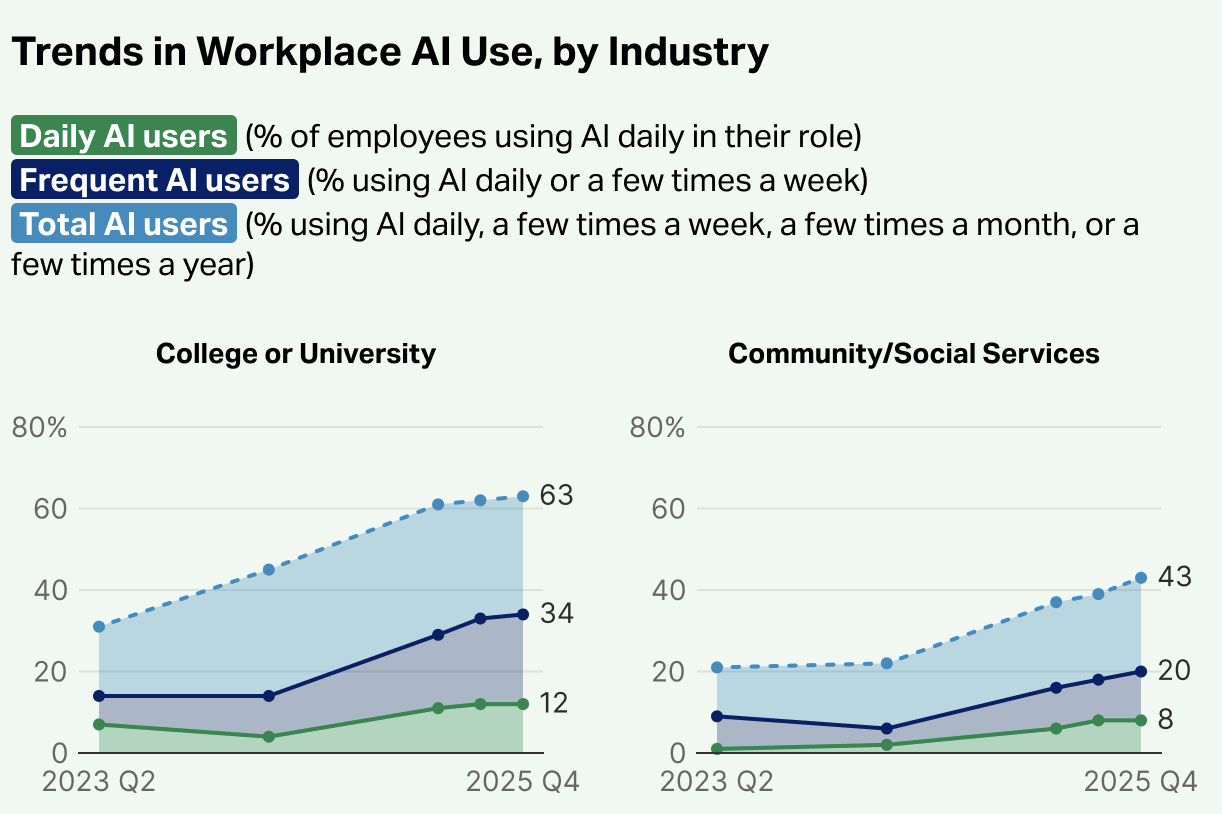
Inside companies that have rolled out AI, 65% of employees say it's made them more productive.
Read that again, because it sounds like a win.
It isn't the whole story.
Only 12% strongly agree AI has actually transformed how work gets done in their organization.
That gap, individuals feeling faster while organizations stay exactly the same, is the most familiar pattern I know.
It's the same gap I've watched play out with every "culture fix" that never left the binder. New systems, same disconnection.
AI didn't break that pattern. It walked straight into it.
This is what I call dashboard blindness, and it's the oldest trap in the book.
Think of a lemonade stand with an automated machine and ten people in line.
The machine breaks down, but now forty people are waiting.
So you start squeezing by hand. You don't notice one or two people leaving, because the dashboard says demand is high. It's green.
The team gets fatigued. Burnt out. And then you look up and nobody's in line.
You got so caught up in the making of the lemonade at any cost that you lost touch with the human connection underneath it.
That's AI right now. The individual dashboard is green. The organizational return has quietly evaporated.
This is the difference between a leading indicator and a lagging one, and it's why the tool can look like a win while the culture underneath it runs dry.
Gallup found the two strongest predictors of whether AI actually works inside a company.
How well it fits into existing workflows. And whether managers actively support it.
Only 21% of employees strongly agree their manager is doing that second part.
Here's what that 21% versus everyone else actually produces.
Employees with active manager support: 79% use AI frequently. Without it: 46%.
With support, employees are 8.7 times more likely to say AI changed how work gets done.
With support, they're 7.4 times more likely to say AI freed them up to do their best work.
That's not a rounding error.
That's the entire ROI of your AI investment, sitting inside whether one person, a mid-level manager most executives never think about, knows how to champion the tool with their team.
I've watched this exact dynamic drain the life out of cultures long before AI showed up.
Leadership hands down a strategy. Middle management gets no real coaching on how to carry it.
The frontline is left to guess, resist, or quietly disengage.
It's dehydration by a different name.
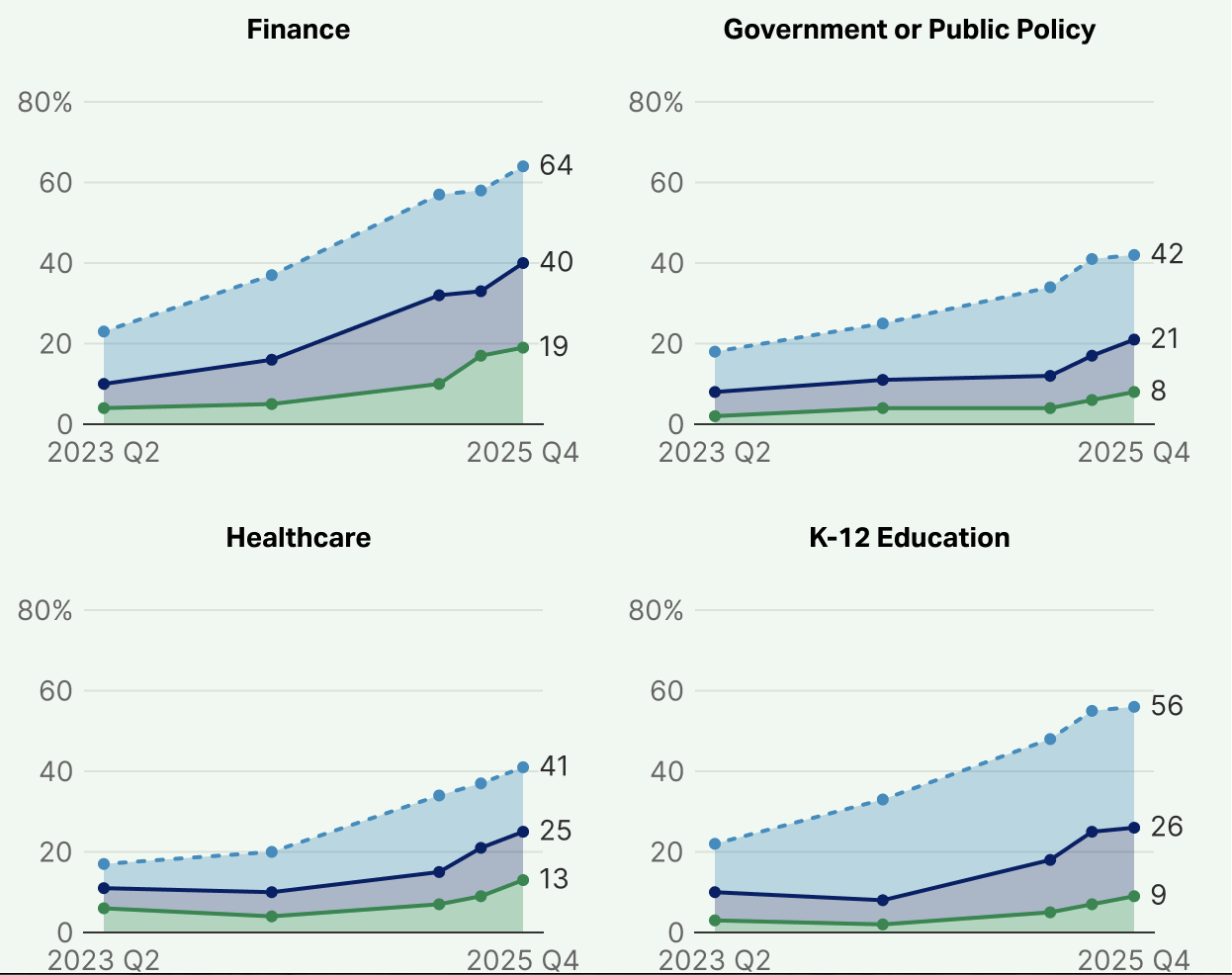
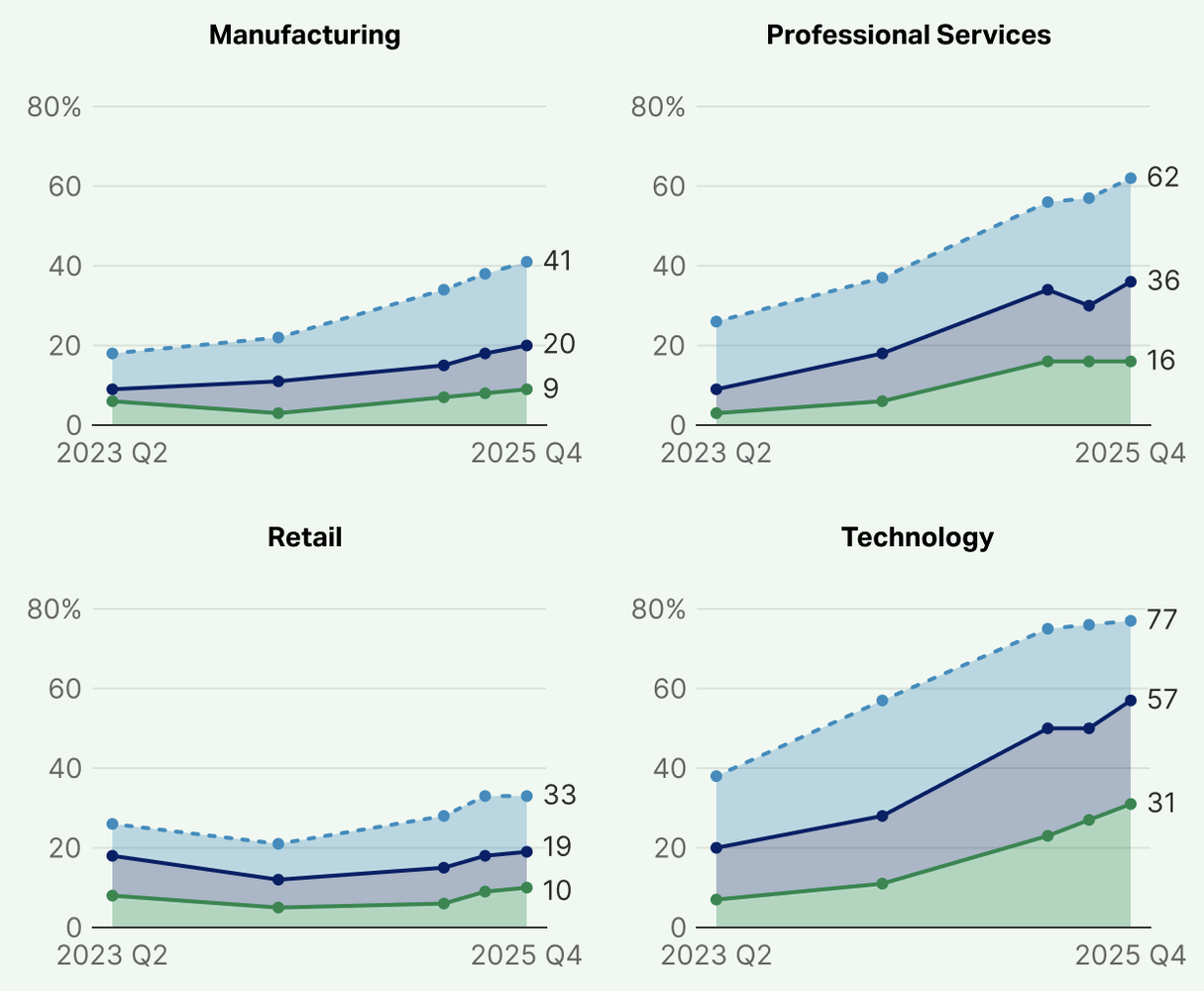
Eighteen percent of U.S. employees believe their job will be eliminated by AI within five years.
In companies that have already implemented it, that jumps to 23%. In finance and tech, closer to a third, 31% to 32%.
And yet only 1% of laid-off workers actually cite AI as the reason.
The anxiety is outrunning the evidence.
But anxiety doesn't need to be accurate to be corrosive.
Unaddressed, it suppresses exactly the behavior leaders are hoping AI will unlock. Experimentation. Adoption. Trust.
You cannot out-innovate a workforce that's quietly bracing for its own obsolescence.
Just 25% of employees say their organization has communicated a clear AI strategy.
And 23% don't even know whether AI has been implemented at all.
That number climbs to 26% among individual contributors, the very people expected to use it every day.
You cannot rehydrate what you never told people was dry.
When strategy doesn't reach the team level, people default to non-use, no matter what tools are sitting on their desktop.
This is a leading indicator of a culture problem, not a technology one.
Gallup's data isn't really a story about artificial intelligence.
It's a story about what happens when powerful technology meets an under-hydrated culture.
The tool performs at the individual level and evaporates at the organizational level.
Same as it's always been. Same as it will be with whatever comes after AI.
The fix was never going to be a better model or a faster rollout.
It's the unglamorous, deeply human work. Equipping managers to actually lead the change.
Naming the fear instead of hoping it goes away. Telling people the plan before you hand them the tool.
That's not a technology strategy. That's a culture strategy wearing a technology costume.
This is the pattern I explore in depth in Thirsty, the quiet evaporation that happens while your dashboards still say green.
The book was built for exactly this moment, where the investment is real but the results aren't showing up because the human infrastructure underneath it was never addressed.
If your organization has the AI tools but not the AI outcomes, this isn't a tech problem.
Start a conversation at premierrapport.com/contact, and ask yourself one honest question first: is your organization seeing AI results, or just AI activity?
Shelley D. Smith, the culture curator behind Premier Rapport, is its CEO and the author of Thirsty. A Certified Predictive Index Partner, executive coach, and speaker, she has spent 35+ years across hospitality, franchise operations, and organizational leadership helping companies detect and repair culture before it shows up in the numbers.
Learn more at premierrapport.com/about or start a conversation at premierrapport.com/contact.
Gallup, "AI and Workplace Productivity: What Leaders Need to Know in 2026" (July 2026).
Gallup Global Indicator: Artificial Intelligence (2026). Ongoing tracking data on workplace AI adoption.
MIT NANDA, The GenAI Divide: State of AI in Business (2025). Source of the 5% measurable-ROI figure, as cited by Gallup.
Why do most companies see no ROI from their AI investment?
A 2025 MIT study found only 5% of organizations report measurable ROI from generative AI. The bottleneck is rarely technical. Gallup's data shows AI produces gains at the individual task level but stalls at the organizational level because most companies have not redesigned workflows, equipped managers to champion the tool, or communicated a clear strategy. The missing variable is human infrastructure, not a better model.
Why is manager support the biggest predictor of AI success?
Gallup found that employees whose managers actively support AI use are 8.7 times as likely to say AI has transformed how work gets done, and 7.4 times as likely to say AI frees them to do their best work. Frequent AI use jumps from 46% to 79% with manager support. Yet only 21% of employees strongly agree their manager provides that support, which is where most AI ROI evaporates.
What is dashboard blindness in workplace culture?
Dashboard blindness is when leaders trust a green metric while a human problem grows underneath it. With AI, 65% of employees report being more productive, so the individual scorecard looks positive, but only 12% say AI transformed how the organization works. The dashboard says the investment is working while the organizational return quietly evaporates.
Do employees really lose their jobs to AI?
The fear outpaces the evidence. 18% of U.S. employees believe AI will eliminate their job within five years, rising to 23% in companies that have already implemented AI and 31% to 32% in finance and technology. Yet only 1% of laid-off workers cite AI as the primary reason. The anxiety does not need to be accurate to be corrosive, because it suppresses the experimentation and trust leaders are hoping AI will unlock.
How do you fix an AI rollout that isn't producing results?
Treat it as a culture strategy, not a technology strategy. Equip managers to actively champion the tool with their teams, communicate a clear AI plan (only 25% of employees say their organization has one), and name employee fear directly instead of hoping it goes away. The tools are almost never the problem. The human infrastructure underneath them is.
Explore articles, case studies, and resources - crafted to keep you ahead.