
New Wharton research shows teams can beat the best individual by 60% or lose by 3x, depending on the task. The real problem isn't collaboration. It's task-matching.

Leaders love saying "let's get the team together on this."
It feels decisive. Collaborative. Modern.
But what if that instinct is quietly costing you speed, quality, and results?
Here is the claim I want you to sit with: collaboration is not a virtue.
It is a tool.
And like any tool, it works brilliantly in some situations and destroys value in others.
New research from Wharton's Computational Social Science Lab, published in Management Science, should make every leader pause before defaulting to "get everyone in a room."
The study recruited 1,231 people to complete 20 different tasks. Some worked alone.
Others worked in groups of three or six.
The performance gap wasn't small.
Sometimes teams beat the strongest individual by 60%.
Other times, teams performed three times worse than a single strong individual.
Same people. Wildly different outcomes.
The variable wasn't talent or effort.
The variable was the task itself.
Teams did well on tasks with a clear, verifiable answer, where members could build on each other's work and catch each other's errors.
They struggled on open-ended work with no single right answer, the kind where success is subjective and there are many valid approaches.
The assumption that "creativity is a team sport" didn't hold up.
Groups often made that kind of work harder, not easier.
I have been watching this pattern for years, long before there was a study to point to.
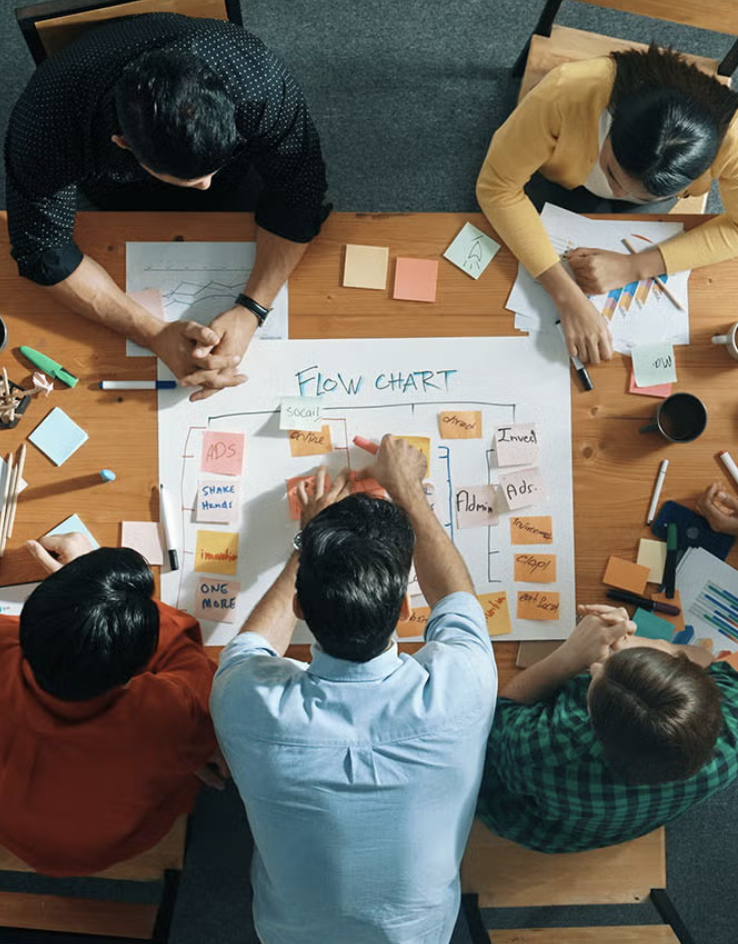
A leadership team gets stuck on a problem.
Someone says, "we need more perspectives."
So they expand the working group. Add stakeholders. Schedule more meetings.
Six months later they are still stuck.
Now with more opinions, less clarity, and a room full of people who have quietly stopped believing anything will actually get decided.
That's not a collaboration problem.
That's a task-matching problem.
And I'll be honest, I used to read that stall as a people problem too.
It took me a while to see that the people were fine.
The work had simply been handed to the wrong structure.
The Wharton research points to something I want leaders to internalize: tasks with verifiable answers create efficient teamwork.
When there is a clear right answer, teams build on each other's contributions, catch errors, and converge quickly.
But when the task is open-ended, when success is subjective, groups often get tangled in their own process.
So the question isn't "should we collaborate?"
The question is "what kind of task is this, really?"
If you're optimizing a process, debugging a system, or analyzing data to find patterns, bring the team.
Multiple perspectives will catch what one person misses. Collaboration compounds.
If you're defining a vision, crafting a message, or making a judgment call where there is no single right answer, start with individual work.
Let people think independently first.
Then bring them together to integrate, not to generate from scratch.
The mistake isn't collaboration itself.
The mistake is treating it as the default for everything.
I see this confusion in how leaders frame problems.
They'll say "we need the team aligned on this" when what they actually need is one person to make a clear call the team can then execute.
They'll say "let's brainstorm solutions" when what they need is three people to draft options independently, then the team to evaluate.
Most leaders never learned to tell the difference between tasks where collective input improves the outcome and tasks where it just creates noise.
So they default to the same pattern: pull everyone in, talk it through, hope consensus emerges.
That works sometimes.
But it fails predictably on the tasks where one person's clear thinking would cut through faster and cleaner than six people negotiating their way to a compromise.
Three times worse.
That's not a rounding error.
That's the difference between shipping and stalling.
This is a leading indicator hiding in plain sight.
Long before disengagement shows up in a survey, you can feel it in the room where nobody wants to own the call, so everyone reaches for "let's get the team together."
That reflex feels safe. It feels inclusive.
And on the wrong task, it slowly teaches your best people that decisions here go to die.
So before you schedule the next working session, ask three things.
Does it have a verifiable answer?
Bring the team.
Is it open-ended, creative, or a judgment call?
Start with individual work, then integrate.
Does it need collective buy-in to execute? Collaborate on the plan, not on the decision.
Your team isn't underperforming because they can't work together.
They're underperforming because they're being asked to work together on tasks that one person could solve faster and better.
Stop defaulting to collaboration.
Start designing for the task.
This is the kind of quiet, daily leadership choice I write about in Thirsty, the small decisions that shape a culture long before any dashboard registers them.
If your team keeps expanding the room and still can't get unstuck, that's usually a culture signal worth reading early.
Start a conversation with Premier Rapport and we'll help you tell the difference between a people problem and a task-matching one.
Shelley D. Smith, the culture curator behind Premier Rapport, is its CEO and the author of Thirsty. A Certified Predictive Index Partner, executive coach, and speaker, she has spent 35+ years across hospitality, franchise operations, and organizational leadership helping companies detect and repair culture before it shows up in the numbers.
Learn more at premierrapport.com/about or start a conversation at premierrapport.com/contact.
Knowledge at Wharton, "When Do Teams Outperform Individuals?"
When do teams outperform individuals at work?
Teams tend to outperform individuals on tasks with verifiable answers, where members can build on each other's work, catch errors, and converge on a correct solution. On open-ended, creative, or judgment-based tasks with no single right answer, groups often perform worse than a strong individual. Wharton research found the same people could beat the best individual by 60% or lose by a factor of three, depending entirely on the task.
Why does collaboration sometimes lower the quality of work?
Collaboration adds coordination cost. On tasks without a verifiable answer, groups can get tangled in their own process, dilute accountability, and negotiate toward compromise rather than clarity. The result is slower decisions and, on some tasks, lower-quality output than one clear thinker would produce alone.
Should you brainstorm creative work as a group or work alone first?
For open-ended creative work, have people think and draft independently first, then bring the group together to compare, integrate, and refine. Generating from scratch as a group tends to produce noise and premature consensus. Groups are better at evaluating and combining independent options than at creating them together.
How do you decide whether to assign a task to a team or an individual?
Ask three questions. Does the task have a verifiable answer? Bring the team. Is it open-ended, creative, or a judgment call? Start with individual work, then integrate. Does it need collective buy-in to execute? Collaborate on the plan, not the decision itself.
Is more collaboration always better for company culture?
No. Defaulting to collaboration on every task slows decisions, dilutes accountability, and can erode trust when people stop believing anything will get decided. Healthy culture comes from matching the work to the right structure, not from adding more meetings and stakeholders to everything.
Explore articles, case studies, and resources - crafted to keep you ahead.