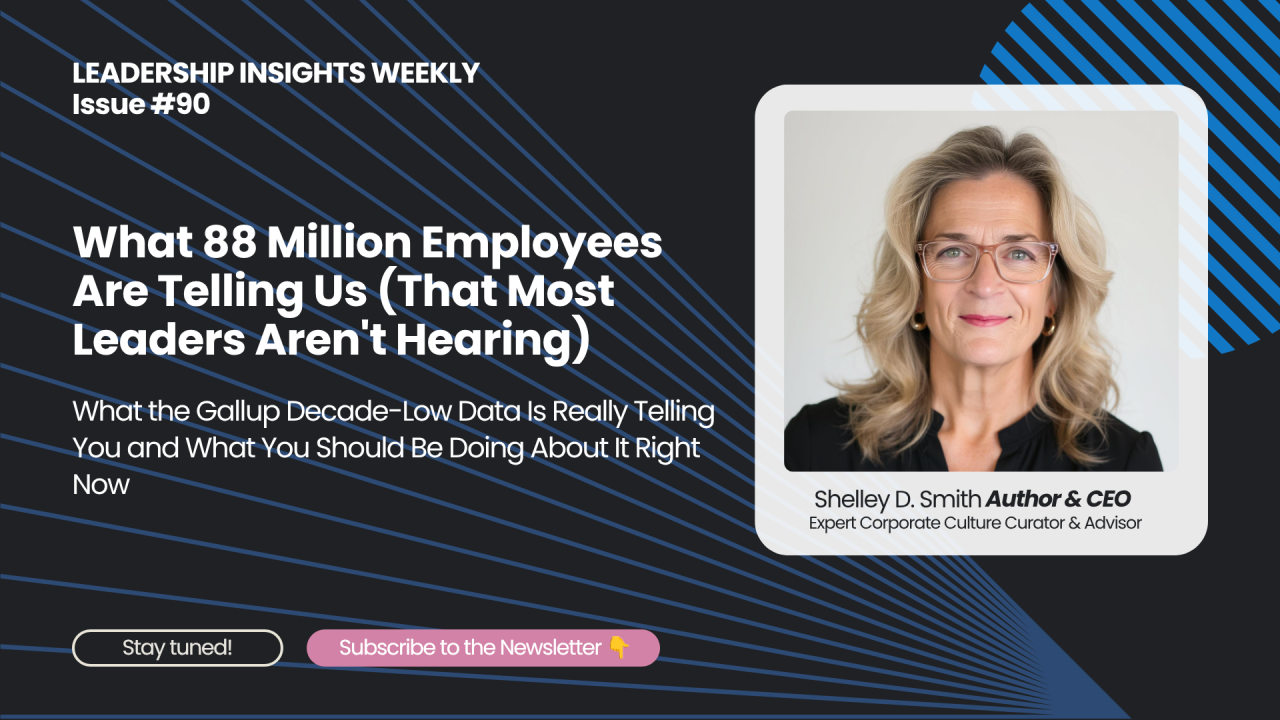

141 C-suite leaders across 7 industries admitted the same thing: the problem wasn't their people - it was their systems. Here are the 5 shifts they're implementing and the case study that proves it.


You don’t need better people. You need better systems that allow good people to do great work.
I spent a quarter listening to conversations across construction, healthcare, tech, legal, nonprofit, insurance, and services.
Every leader had the same complaint: “We just can’t find good people anymore.”
By the end, the ones who got honest admitted something different.
The problem wasn’t their people. It was their systems.
This is what I’ve been calling cultural dehydration.
When the organizational systems that should support people have dried up, everyone works twice as hard for half the results.
The fix isn’t more talent. It’s rehydration.
The leaders serious about 2026 aren’t posting more job openings.
They’re redesigning how work actually gets done.
Front-loading shadowing and diagnostic work before anyone flies solo.
Stop throwing people into roles and hoping they figure it out.
The best-performing teams spent 2–3 weeks on structured observation before giving anyone independent responsibility.
Result: 60% reduction in early-stage errors and a massive drop in “I didn’t know that’s what you wanted” conversations.
Writing down who decides what and expecting decisions at lower levels.
Most organizations have decision-making amnesia.
People escalate everything because they don’t know where authority starts and ends.
Leaders who documented decision rights saw immediate improvements in speed and accountability.
When your team knows they own the call, they make better calls.
Measuring outcomes, not busyness.
Activity metrics are killing your culture.
Leaders making real progress stopped tracking hours worked, meetings attended, or emails sent.
They started tracking:
Did the client stay? Did the project meet quality standards? Did the team member grow?
Shifting from input to outcome metrics changed everything.
Auditing and simplifying processes every quarter.
Processes calcify fast. What worked six months ago creates friction now.
The smartest leaders built quarterly audits into their rhythm, asking: what’s harder than it needs to be?
Where do handoffs break? What are we doing because “we’ve always done it this way”?
Hiring for responsiveness, reliability, and learning agility.
This is counterintuitive: stop hiring for industry experience first.
Start hiring for how fast someone responds, how consistently they follow through, and how quickly they adapt.
This is the same behavioral-assessment principle behind effective culture-fit measurement - looking at patterns, not résumés.
A company in the Midwest was struggling with operator turnover and inconsistent service quality.
They kept hiring “experienced operators” who knew the equipment but couldn’t work with the team or communicate with clients.
They tried something different.
They hired someone with zero industry experience - no background, no technical knowledge.
What he had: high responsiveness, genuine curiosity, and a track record of learning complex skills fast.
They identified these traits through behavioral assessment rather than filtering for years of experience.
They didn’t throw him in blind. They front-loaded training, paired him with their best mentor, and gave clear decision rights from day one.
They measured outcomes (client satisfaction, project success), not hours logged.
Within six months: highest customer satisfaction scores on the team, 60% revenue lift on his accounts, zero client complaints.
They didn’t get lucky. They changed what they were looking for.
And they used objective behavioral data to find it - translating “we need better people” into “we need people whose natural working style matches what this role actually requires.”
The gap isn’t talent. It’s clarity, systems, and structure - the invisible architecture that makes good performance automatic instead of heroic.
This is what internal leadership development addresses at scale: building the organizational infrastructure where people flourish without requiring individual heroics.
When systems support people instead of fighting them, “people problems” transform into solvable design challenges.
Your next step: pick one shift and implement it this week.
Not all of them. Just one.
Document decision rights.
Replace one activity metric with an outcome metric.
Schedule 30 minutes to ask your team “What’s harder than it needs to be?”
Start there. Culture compounds through consistency, not intensity.
Shelley D. Smith, the culture curator behind Premier Rapport, is its CEO and the author of Thirsty. A Certified Predictive Index Partner, executive coach, and speaker, she has spent 35+ years across hospitality, franchise operations, and organizational leadership helping companies detect and repair culture before it shows up in the numbers.
Learn more at premierrapport.com/about or start a conversation at premierrapport.com/contact.
Why can’t organizations find good people?
Based on 141 C-suite conversations across 7 industries: the problem isn’t people - it’s systems.
Organizations need front-loaded training, documented decision rights, outcome metrics, process simplification, and hiring for learning agility. Better systems let good people do great work.
What shifts are leaders making for 2026?
Five shifts: front-load shadowing (60% error reduction), document decision rights, measure outcomes not busyness, audit processes quarterly, and hire for responsiveness and learning agility over industry experience.
Should you hire for experience or learning agility?
Learning agility outperforms experience alone.
Case study: zero-experience hire with high responsiveness and curiosity achieved highest satisfaction scores, 60% revenue lift, zero complaints within six months - with front-loaded training, clear decision rights, and outcome measurement.
What is cultural dehydration in organizational systems?
When systems that should support people dry up: decision amnesia, activity theater, process calcification, role misalignment.
Everyone works twice as hard for half the results. The fix is rehydration - building systems and feedback loops, not hiring more talent.
Explore articles, case studies, and resources - crafted to keep you ahead.