
Engagement scores look fine but something feels off. Learn the leading indicators of cultural dehydration that your dashboard can't show you - 9 to 12 months before crisis.


There's a particular kind of dread that shows up in leaders who are doing everything "right."
The metrics are holding. Training completions are up.
Engagement surveys came back "acceptable."
Nobody is quitting. Nobody is loudly unhappy.
And yet.
Something feels off. The energy in meetings has changed.
The best people on your team have gotten quieter.
People are going through the motions of learning without anything actually sticking.
You're working harder and somehow accomplishing less.
You're not imagining it.
What you're feeling is the gap between what your dashboard shows you, and what your culture is actually doing.
And the reason that gap is so disorienting is that we've been trained to trust the wrong data.
Last week on LinkedIn, I talked about the "Yes And" reality so many L&D leaders and executives are living right now.
Your completion rate is at 94%.
And nobody can teach what they learned.
Your calendar is full of training sessions.
And people have stopped asking for development opportunities.
What you're tracking are lagging indicators - the data that shows up after the cultural dehydration has already set in.
By the time turnover spikes, projects fail, and your best people walk out saying "better opportunity," the drought didn't just start. It's been building for 9 to 12 months.
You weren't missing the signals. You were measuring the wrong things.
The same pattern shows up in every green-lit dashboard I've walked into over the past 35 years - the numbers say one thing while the hallways say another.

Leading indicators don't show up in your annual survey.
They show up in the room. In the energy. In the silence.
Teams stuck in emergency mode lose the small daily human connections that keep culture alive.
When the preventative work stops - the check-ins, the informal conversations.
The moments of genuine connection.
The foundation starts to crack long before you see it in your data.
Watch for silent elevators. Quiet meetings where nobody challenges anything.
The absence of spontaneous hallway conversations.
When people stop talking to each other, they haven't gotten more introverted.
They've stopped trusting that it's worth it.
These are the culture leaks that no survey question will ever capture.
People eating lunch alone. New hires not integrated.
Training that creates no connections between people.
When your learning environment doesn't build relationships alongside skills, you're not building capability - you're filling seats.
The Digital Safety Paradox I wrote about recently shows exactly how this plays out in virtual learning environments.
This one hits hardest in L&D specifically.
People stop asking to learn.
Career conversations disappear.
The growth mindset your people used to bring gets quietly replaced by a fixed one.
Not because they've given up on themselves, but because they've stopped believing your organization has a place for where they're going.
Here's the layer most organizations are missing.
As AI and automation take over more of the systems, processes, and speed functions inside your organization, what's left...the thing that cannot be automated, is judgment, connection, and culture.
AI scales your systems. Humans carry your culture.
Which means the leading indicators I'm describing aren't just learning metrics.
They're your early warning system for whether your human infrastructure is holding, or quietly evaporating.
In the middle of a technology transformation that demands more from your people, not less.
If your training environment isn't building psychological safety, genuine connection, and the belonging signals that create retention, then you're scaling your systems while hollowing out the people running them.
That's not a productivity problem.
That's a culture drought at the worst possible time.
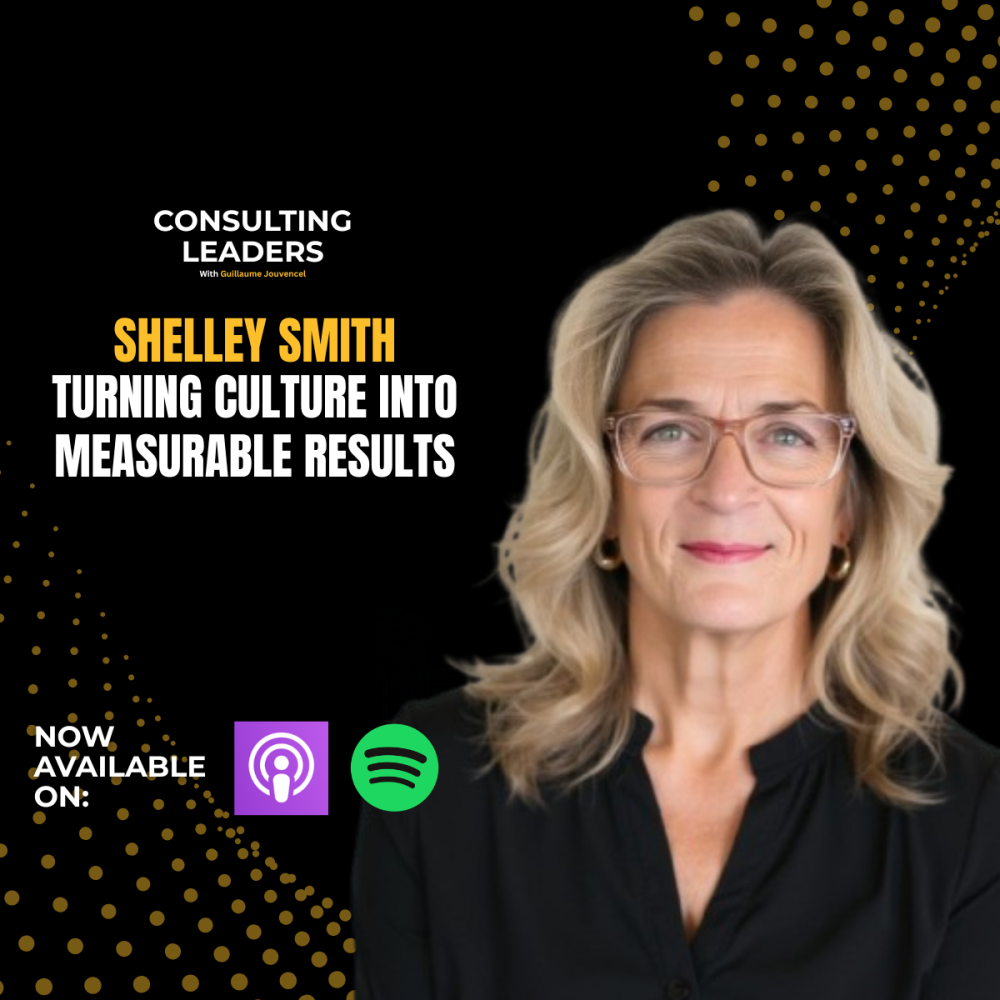
I recently sat down with Guillaume Jouvencel on the Consulting Leaders podcast to go deeper on exactly this.
We talked about how culture becomes measurable, why most leaders are reading the wrong signals, and what it actually takes to turn cultural dehydration into growth.
Available now on Apple Podcasts and Spotify.
You don't fix a cultural drought by adding more training.
You fix it by learning to read the signals before they become a crisis — and then executing with precision on what actually moves people.
Here's the framework I use with clients:
1. Move to Leading Indicators. Stop waiting for your financial dashboard to turn from green to yellow. Identify the "thirst moments" — the behavioral and relational signals that tell you where dehydration is setting in months before it shows up in your data.
2. Implement the 80/20 Rule. Don't try to rehydrate the whole organization at once. Start with small pockets and departments. Create culture champions where the conditions are right. Positive momentum is contagious when it's real.
3. Align by Human Hardwiring. Use behavioral assessments to understand how different people on your team communicate and make decisions. One-size-fits-all training doesn't build belonging. It builds compliance. There's a difference — and your people know it.
4. Read Your Training Environment as a Culture Signal. How your people show up for learning tells you everything about their relationship with the organization. Cameras off isn't a Zoom problem. Passive attendance isn't a content problem. They're belonging signals. Treat them that way.
Here's a simple diagnostic to try before your next team training or meeting:
Notice how many people participate without being called on.
Are people offering ideas voluntarily, or waiting to be asked? Do questions get answered honestly, or with the "safe" answer? After the session ends — what conversation happens in the parking lot that didn't happen in the room?
The gap between what people say in your training and what they say after is your leading indicator. That's where the real data lives.
If you're looking at your training and engagement data right now and wondering what it's actually telling you...
That feeling isn't paranoia. It's a leading indicator.
We'll walk through what you're seeing, what it means, and exactly what to execute next.
No templates. No generic frameworks.
Just a clear-eyed read on your culture and a plan that actually fits.
Shelley D. Smith, the culture curator behind Premier Rapport, is its CEO and the author of Thirsty. A Certified Predictive Index Partner, executive coach, and speaker, she has spent 35+ years across hospitality, franchise operations, and organizational leadership helping companies detect and repair culture before it shows up in the numbers.
Learn more at premierrapport.com/about or start a conversation at premierrapport.com/contact.
Engagement surveys are lagging indicators. They show you what already went wrong.
By the time turnover spikes and projects fail, the cultural dehydration has been building for 9 to 12 months.
Leading indicators show up in the room, in the energy, and in the silence.
Not in annual surveys.
Leading indicators include teams losing daily human connections because they're stuck in emergency mode, silent meetings where nobody challenges anything, people eating lunch alone with new hires not being integrated, and employees who stop asking to learn. The gap between what people say in your training and what they say afterward is your most reliable leading indicator.
Cultural dehydration is the slow erosion of trust, connection, and belonging that happens months before your dashboards detect it. The metrics hold steady but something feels off - energy changes, your best people get quieter, and people go through the motions without anything sticking.
As AI takes over systems and speed functions, what remains...judgment, connection, culture - cannot be automated. If your training environment isn't building psychological safety and belonging signals, you're scaling your systems while hollowing out the people running them.
Explore articles, case studies, and resources - crafted to keep you ahead.